- While southern Europe raised golden-visa floors, several CIS states and Georgia opened or retooled investor residence in 2025–2026—often with capital tickets well below €500,000.
- A residence card is not a second passport: many programmes leave naturalisation clocks, language tests, and dual-citizenship bans unresolved or hostile.
- Family pricing, sanctions exposure, and whether time on the card even counts toward citizenship decide whether “cheap” capital is cheap at all.
Why look east of Schengen at all?
Portugal, Spain, Greece, and other EU brands still dominate investor-migration marketing. Thresholds climbed, queues lengthened, and political risk around property routes rose. Households that already speak Russian, have family ties in the former Soviet space, or want a non-EU fallback now scan a different map.
The Commonwealth of Independent States is a loose post-Soviet club—not every former republic sits inside it—but the practical corridor for this comparison runs from the Caucasus through Central Asia, with Georgia included for geography and programme depth. Flat personal taxes in the 10–15% band, lower living costs, and Eurasian trade links are part of the pitch. So is diversification away from a single Western legal stack.
For contrast inside the EU, Latvia’s company-capital route remains one of the cheaper Schengen tickets—see our Latvia residence guide. The programmes below do not replace Schengen mobility; they answer a different question: what does invested capital buy when the goal is a Plan B outside the EU’s crowded clubs?
Three filters before any wire transfer
First, dual nationality. Several CIS states formally reject holding a second passport. Kazakhstan is a clear example on paper. Quiet practice sometimes differs—especially where Russian ties exist—but households that must keep a Western passport usually treat formal renunciation rules as a hard stop, not a footnote.
Second, the presence clock. Investor cards often advertise multi-year validity while naturalisation still demands heavy physical presence, language exams, or both. New golden-visa streams sometimes leave unsettled whether days on that card even count toward citizenship.
Third, sanctions and banking. Russia and Belarus expose applicants to secondary compliance friction that a brochure never prices. A permit that cannot open ordinary banking or travel freely is a different product than a clean mobility card.
Armenia: low capital, fast passport clock
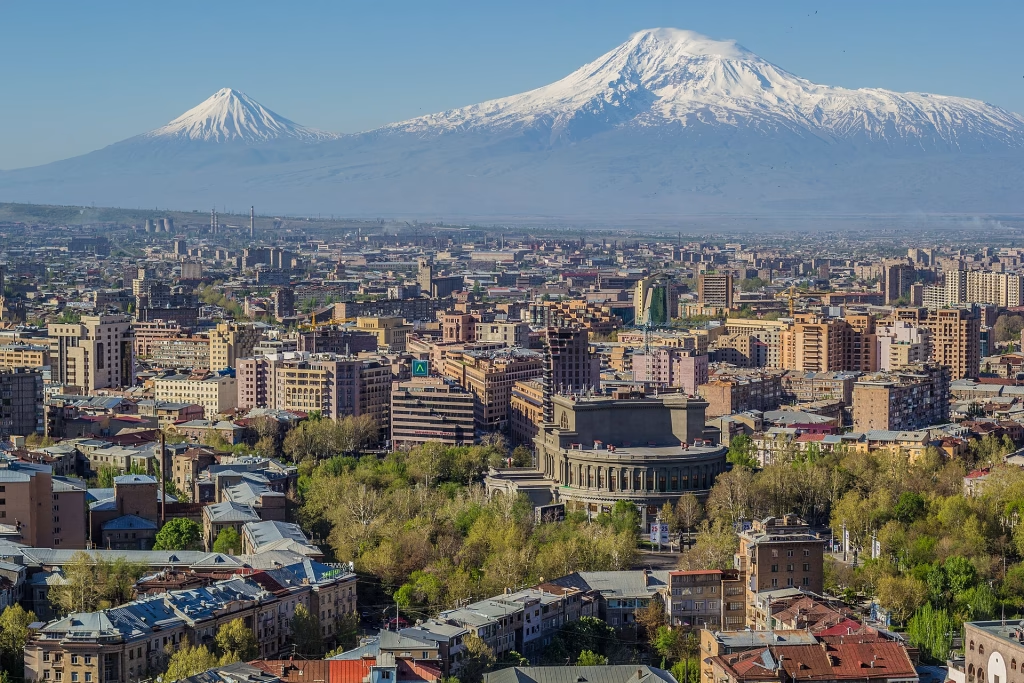
Armenia runs a de facto investor permanent-residence path through business activity or shareholding rather than a published six-figure floor. Practitioners often describe qualifying stakes in the low thousands of dollars when authorities accept the economic story—though file quality still decides outcomes.
A five-year permanent residence card is the usual first prize, renewable in practice. Naturalisation after roughly three years of residence is among the shortest citizenship timelines in the region—if applicants clear a difficult Armenian language and civics exam and meet the common 183-day annual presence expectation. There is no citizenship-by-investment product; residence remains the gate.
Georgia: property, business, and territorial tax
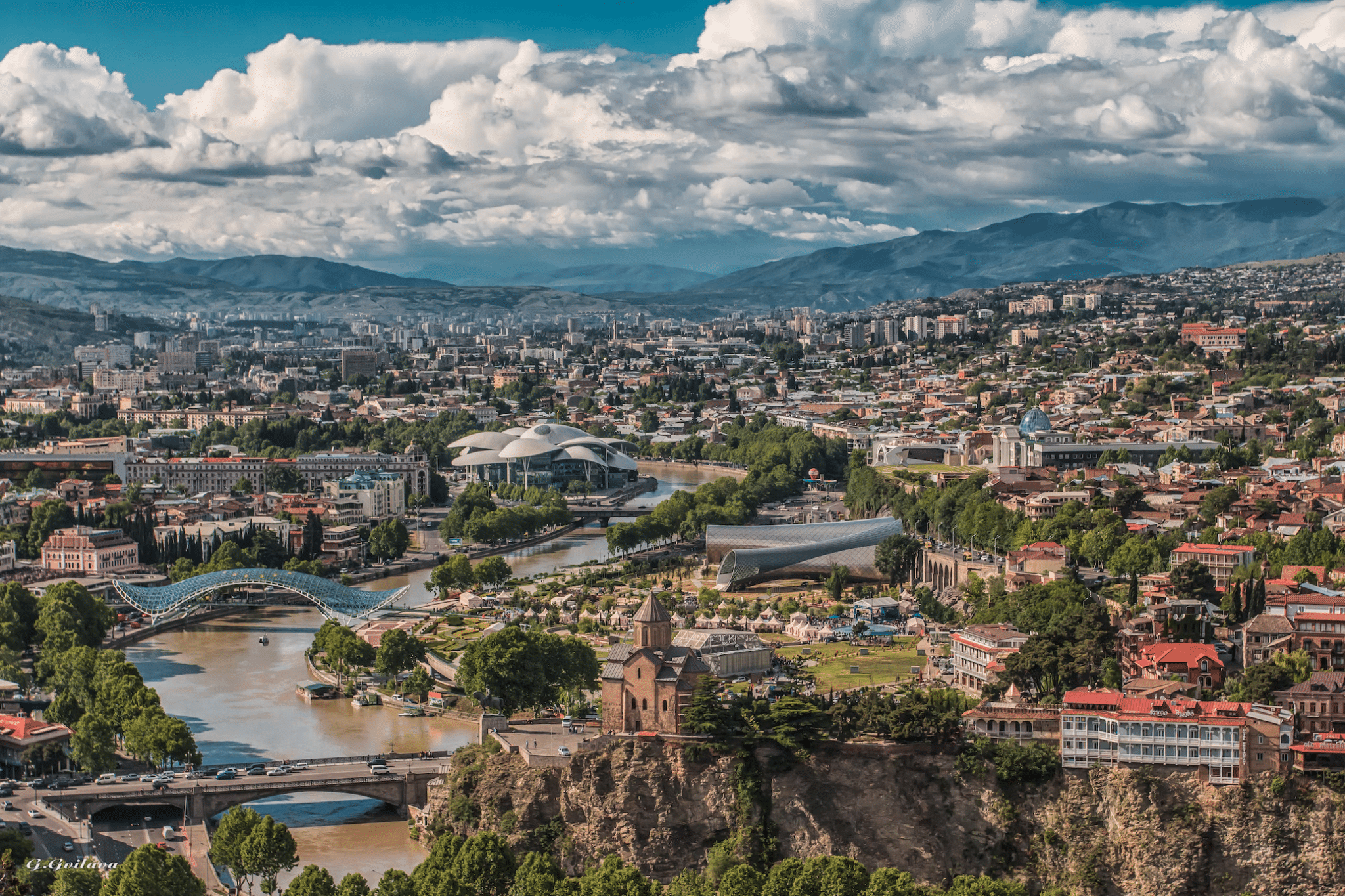
Georgia is not a CIS member, yet it sits on the same planning map. Since 1 March 2026, the short-term property route generally needs non-agricultural real estate valued above $150,000 (accredited appraisal), for a one-year renewable permit while ownership continues. A separate investment residence from about $300,000—property or qualifying business capital—targets a five-year investor permit, still tied to maintaining the investment and later renewal mechanics.
Business investment at the higher tier typically expects turnover milestones on the order of $100,000 in year one and $120,000 thereafter when renewing on a company path. Spouse and minor children usually ride with the principal. Indefinite stay and citizenship remain longer projects—language and civics interviews apply—and continuous-presence rules tightened relative to older folklore. Many Western nationals still enter visa-free for extended stays; company-based temporary residence at lower local turnover thresholds remains a parallel conversation beside pure “golden visa” branding. Territorial tax treatment and the small-business 1% regime overview explain why founders keep Georgia on shortlists. Local reporting also tracks how lawful-stay rules keep tightening around documentation.
Kazakhstan: $300,000 and a digital file
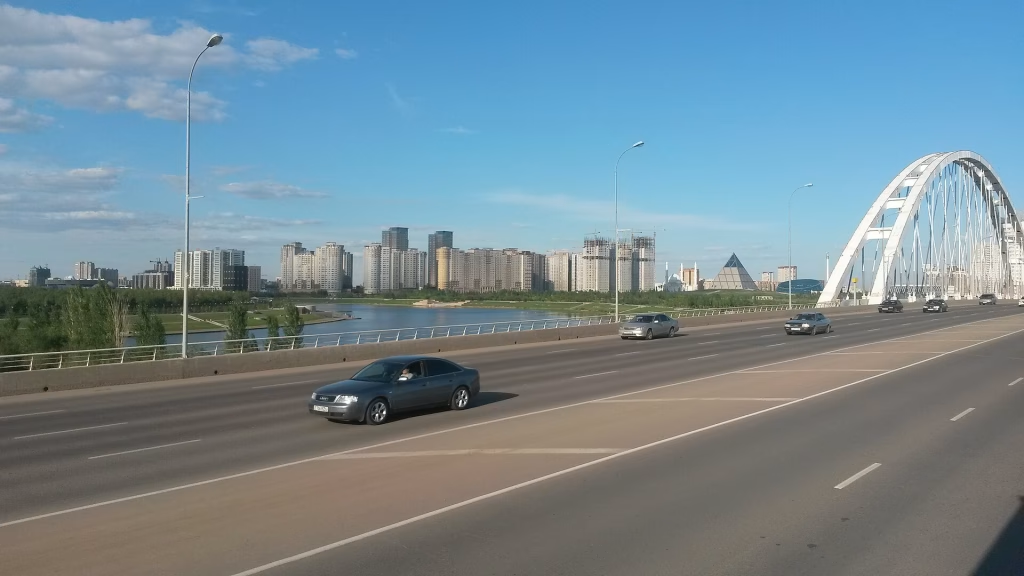
In May 2025 Kazakhstan launched a clearer investor-visa track: invest at least $300,000 into Kazakh company charter capital or locally traded securities, then pursue a residence permit of up to ten years. Official messaging stresses electronic filing. Real estate, plain bank deposits, and government bonds are not the qualifying asset for this headline tier.
Kazakh Invest frames the product as capital, technology transfer, and network access rather than lifestyle marketing. Separately, Kazakhstan’s Neo Nomad visa targets remote workers—a different product with different income tests. Dual-citizenship policy remains a structural caution for anyone eyeing eventual naturalisation.
Uzbekistan: donation vs property maths
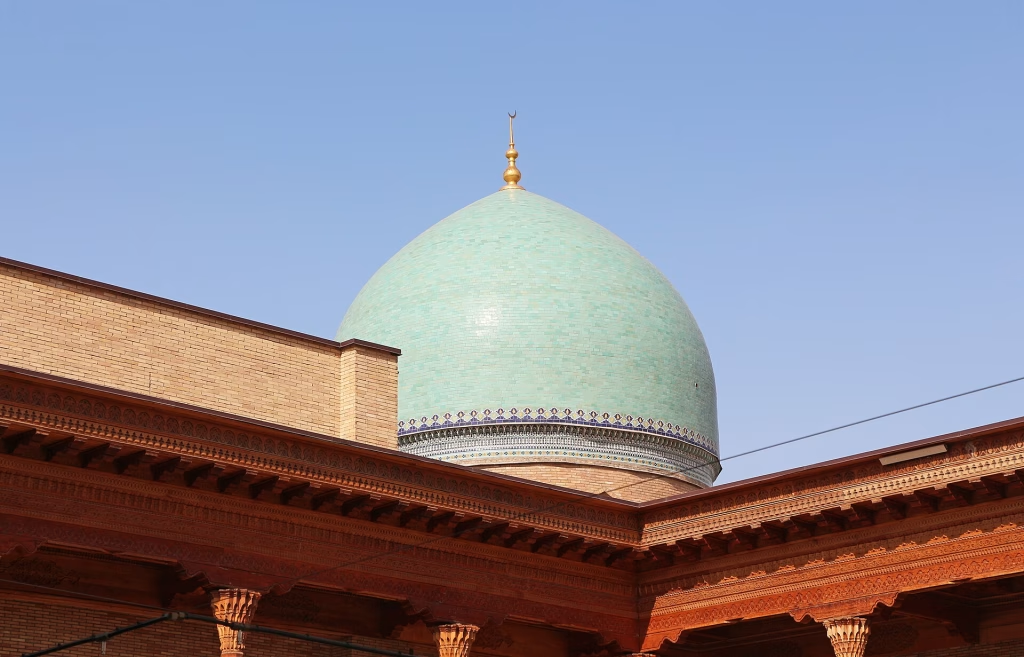
From June 2025, a presidential decree added a simplified five-year residence path framed around a state contribution of $250,000 for the principal and $150,000 per eligible family member. For a couple with one child, the donation arithmetic quickly exceeds half a million dollars—money that does not buy an asset.
Older streams remain the price comparison most families run. Equity into an Uzbek company around $250,000 has been associated with multi-year renewable residence; much larger productive investments target longer ten-year style permits. Property bands commonly cited are about $300,000 in Tashkent and region, $200,000 in major secondary cities, and $100,000 in Karakalpakstan and other regions—often with dependents included without per-head surcharges. Property eligibility has historically been limited to an approved nationality list; current country coverage remains a live check before any Western passport is assumed to qualify.
Kyrgyzstan: five- and ten-year investor visas
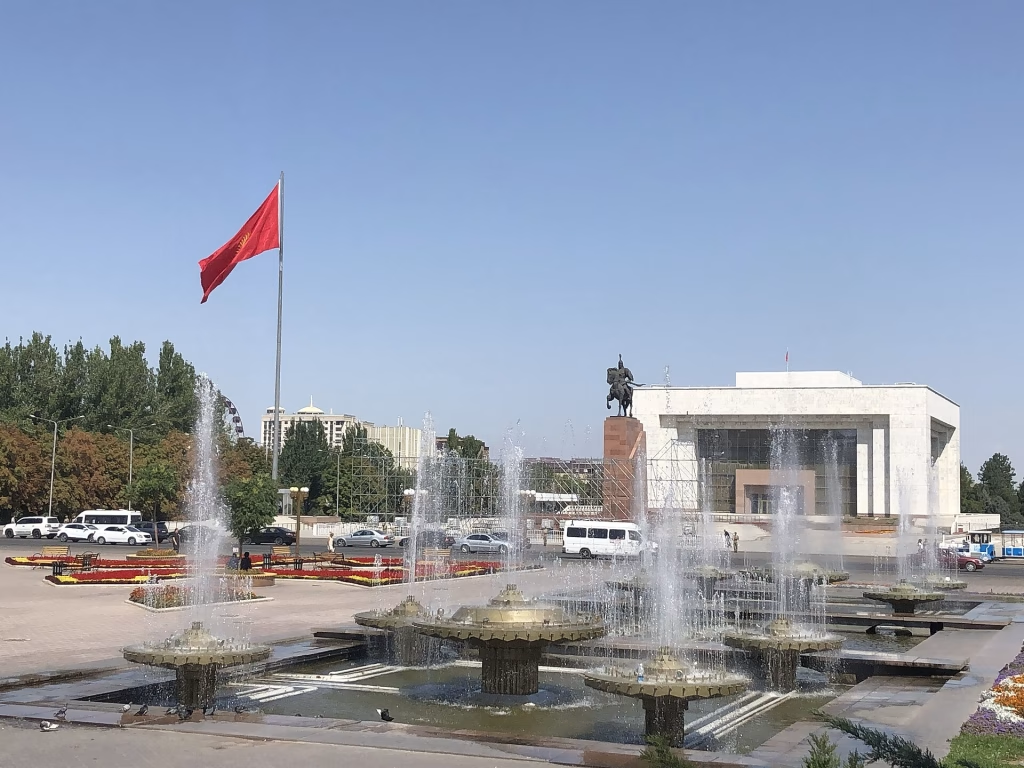
Since a 2023 refresh, Kyrgyzstan’s Type I investor visa can run five years from roughly $115,000 (10 million som) and ten years from about $230,000 (20 million som), subject to FX swings. Capital is expected in productive sectors—industry, agriculture, banking, energy, education, health, IT, and similar ministry-listed fields—not purely speculative parking.
Spouse, minor children, and dependent parents can share the file. Volumes remain modest; longer validity is the main upgrade versus older short investor stamps.
Azerbaijan: Manat thresholds, not a brand name
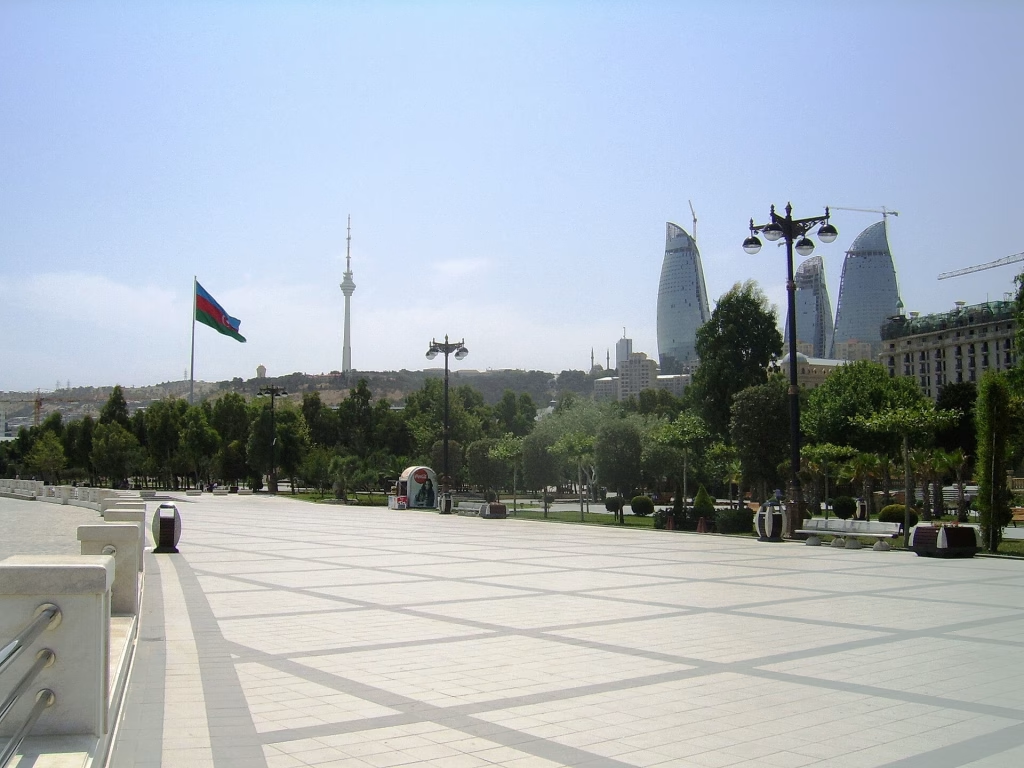
Baku does not sell a glossy “golden visa” label, but investment can support temporary residence. Large economy-wide investments around 500,000 AZN (near $295,000) sit beside smaller tickets: property, bank deposits, or state bonds near 100,000 AZN (roughly $59,000). Larger tickets tend toward multi-year permits; smaller property files often renew annually.
Company founders and directors can qualify on role and operating history without matching the headline capital bands. As elsewhere, the card is residence first—citizenship is a separate, slower conversation.
Moldova: business residence after CBI’s exit
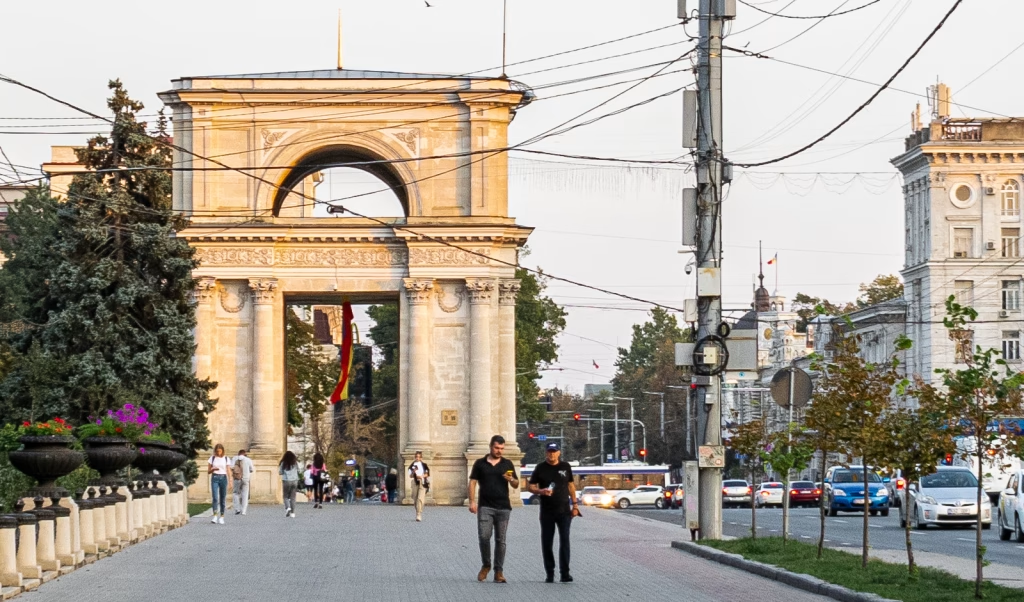
Moldova’s citizenship-by-investment experiment ended after EU pressure around 2019. What remains is foreigner-law residence for business: equity or investment measured in multiples of average local wages, or job creation. Roughly $20,000-equivalent capital—or a single new job—can support a short two-year permit; higher wage multiples or more jobs stretch terms toward three, five, or even eight years on the largest projects.
Announced fund or “strategic sector” permanent-residence ideas resurface in commentary, but operating practice still centres on company formation and payroll or capital tests. Large quoted euro figures are better read as historical echoes of the closed CBI, not a current menu.
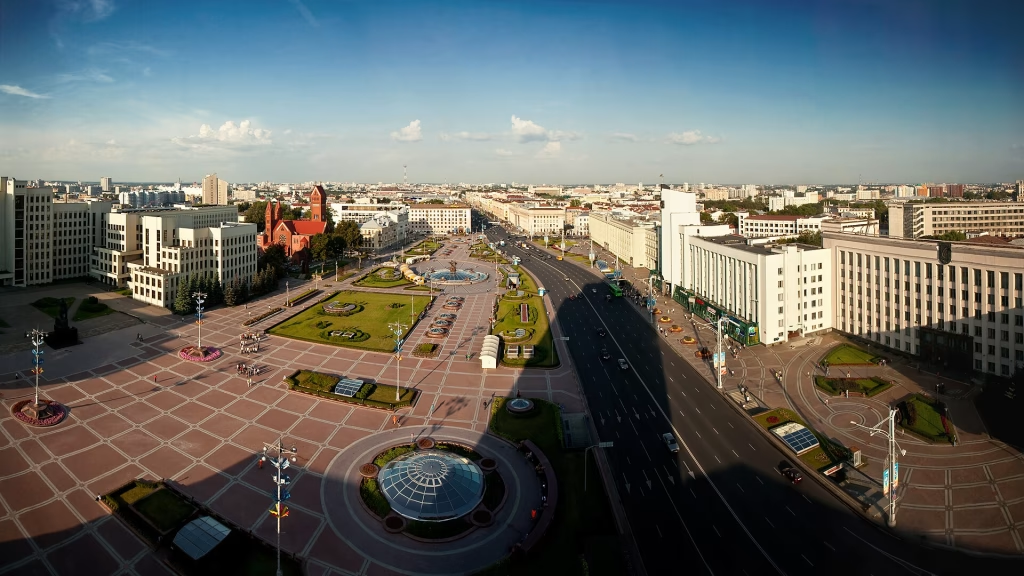
Belarus: permanent residence on paper
Belarus law contemplates immediate permanent residence after investment measured in “base units”—recently discussed near €150,000 equivalent via company or property. That is unusually direct compared with temporary investor visas elsewhere.
Demand stays thin. Sanctions overlap with Russia, travel usefulness is limited for many Western passports, and a second, cleaner residence elsewhere often becomes a practical necessity rather than an optional hedge.
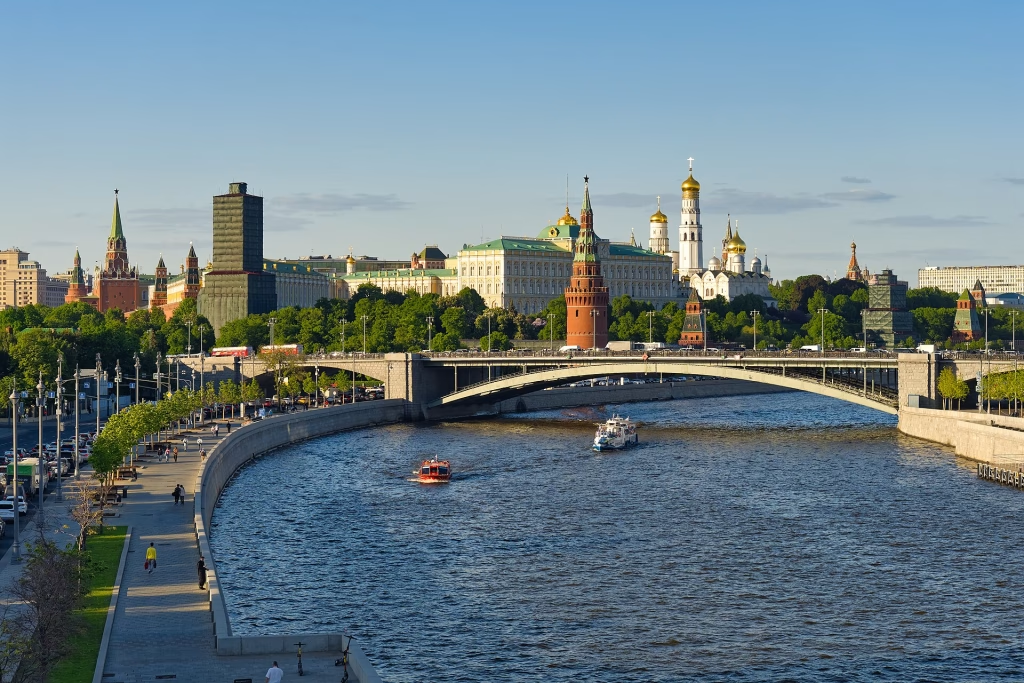
Russia: multi-route PR, low take-up
Russia’s investor permanent-residence framework (from 2023) under-delivered versus early volume targets. Reported intake stayed in the dozens of investors across the first years—geopolitics and sanctions dominate the explanation.
Routes include non-refundable social-project donations from about 15 million RUB, company stakes from about 30 million RUB into firms meeting tax-payment tests, regionally banded new-build property (commonly discussed from roughly 20–50 million RUB depending on location), or founding a company that pays meaningful annual taxes for consecutive years. Family coverage can extend unusually wide across generations. Language/history/law testing has applied to broad age bands of adults; reform talk in 2025 aimed to soften presence and language hurdles to revive demand. Until statutes and practice align, published RUB floors and day-count rules remain moving parts.
Tajikistan: capital without a product brand
There is no marketed golden-visa programme. Foreign investors may seek longer stays when authorities approve a project—commentary often cites about $50,000 as a working minimum plus an accepted business plan in preferred sectors. Procedure and permit length remain opaque in public English sources. For comparative shopping, Tajikistan is a niche project jurisdiction, not a brochure product.
Turkmenistan: closed doors, anecdotal capital
Turkmenistan ranks among the region’s most closed systems. No standard property-for-residence product exists; foreign property rights are tightly controlled. Occasional summaries float investor residence near $500,000, but transparent statute and published case flow are scarce—privileges, if any, tend to hitch to major negotiated projects.
Online-visa experiments and guide-requirement changes signal gradual tourism opening, not an investor-migration marketplace.
How the east stacks against EU tickets
On raw capital, Armenia’s flexible business PR, Moldova’s low wage-multiple company route, Kyrgyzstan’s mid-five-figure som thresholds, and Georgia’s property band undercut many southern-European real-estate floors. Kazakhstan’s $300,000 securities/equity ticket and Uzbekistan’s donation path sit closer to mid-market global programmes—while Uzbekistan’s property stream can still look efficient for families when nationality eligibility holds.
What the east usually does not sell is effortless Schengen. Households that need European travel still weigh a Baltic or Mediterranean card beside—or instead of—a CIS permit. The strategic use-case is diversification: a second legal home base, regional business access, or cultural fit—not a clone of an EU golden visa with Cyrillic letterhead.
What applicants still verify in 2026
Implementing regulations for brand-new streams still matter (Uzbekistan’s donation account mechanics; Kazakhstan’s securities custody proofs). Full-family pricing often diverges sharply from the principal-only brochure. Whether residence days feed naturalisation is a counsel-level question in most files. Dual-citizenship statutes need mapping against keep-or-renounce preferences. Banking and travel under current sanctions lists remain a practical stress test before productive capital enters Russia or Belarus.
Programmes in this belt are expanding precisely because Western investor routes grew crowded and expensive. Capital still buys options—only if the fine print on presence, passports, and politics matches the household’s actual Plan B.