- China’s state-backed line is shipping immersion DUV tools—not a slide deck.
- Planned output: about five systems in 2026 and ~20 in 2027—vs ASML’s ~130 immersion capacity this year.
- The equity selloff priced a long-term story; the EUV wall and factory scale still protect the Dutch lead.
What the market priced in haste
When reports landed that a Shanghai state-owned group had started producing home-grown immersion deep-ultraviolet tools, ASML shares swung hard. Investors treated the headline as proof that the West’s lithography choke point was cracking overnight. The sharper read is quieter: China crossed a zero-to-one industrial gate—not a finish line.
Shanghai Aishengna Electronic Technology Group is named as the manufacturer pulling together domestic lithography teams. Early machines are expected to reach Chinese foundries and memory makers such as SMIC, Hua Hong, and CXMT. That matters for Beijing’s self-reliance drive. It does not mean Veldhoven’s order book collapses in 2026.
Two wavelengths, two different games
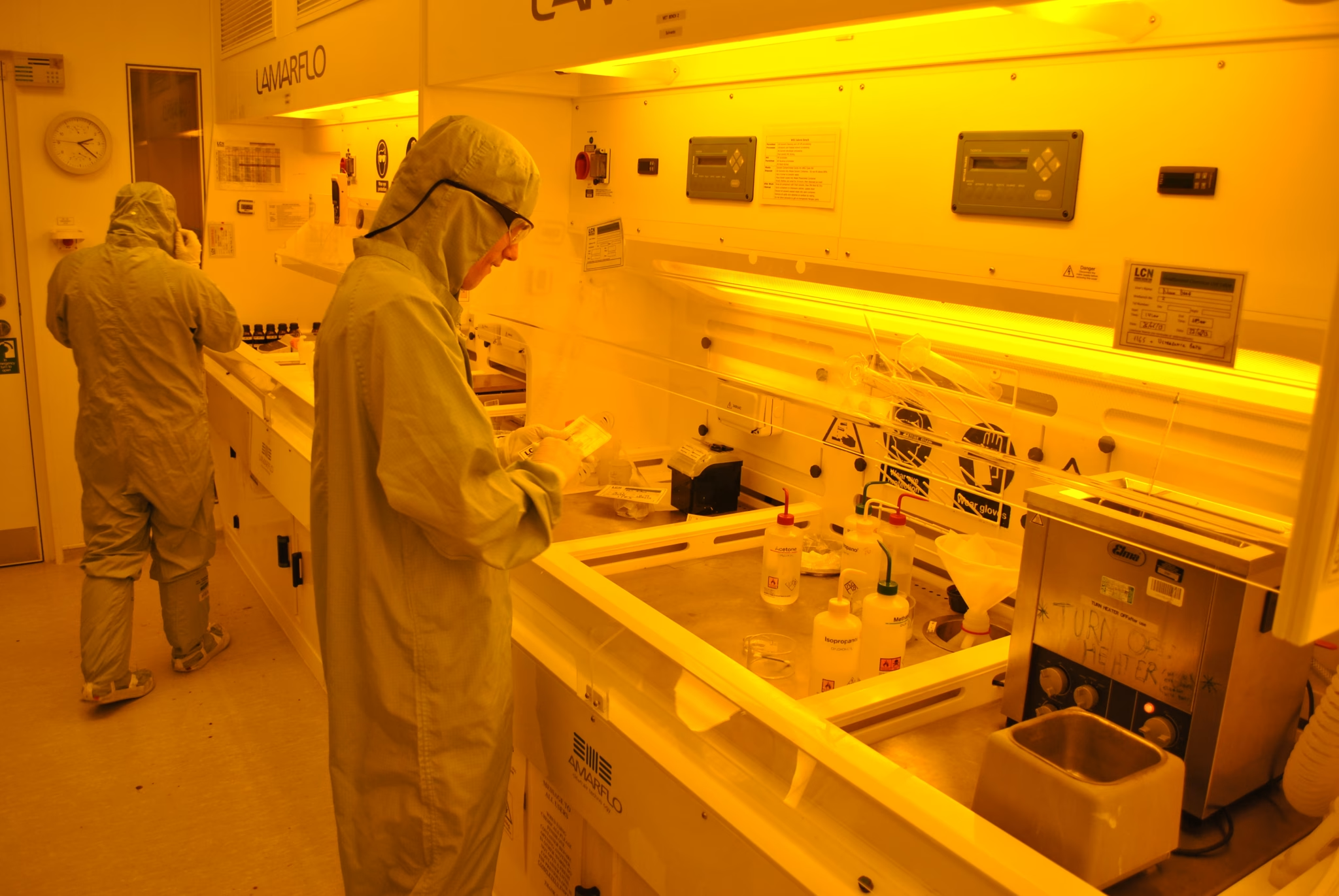
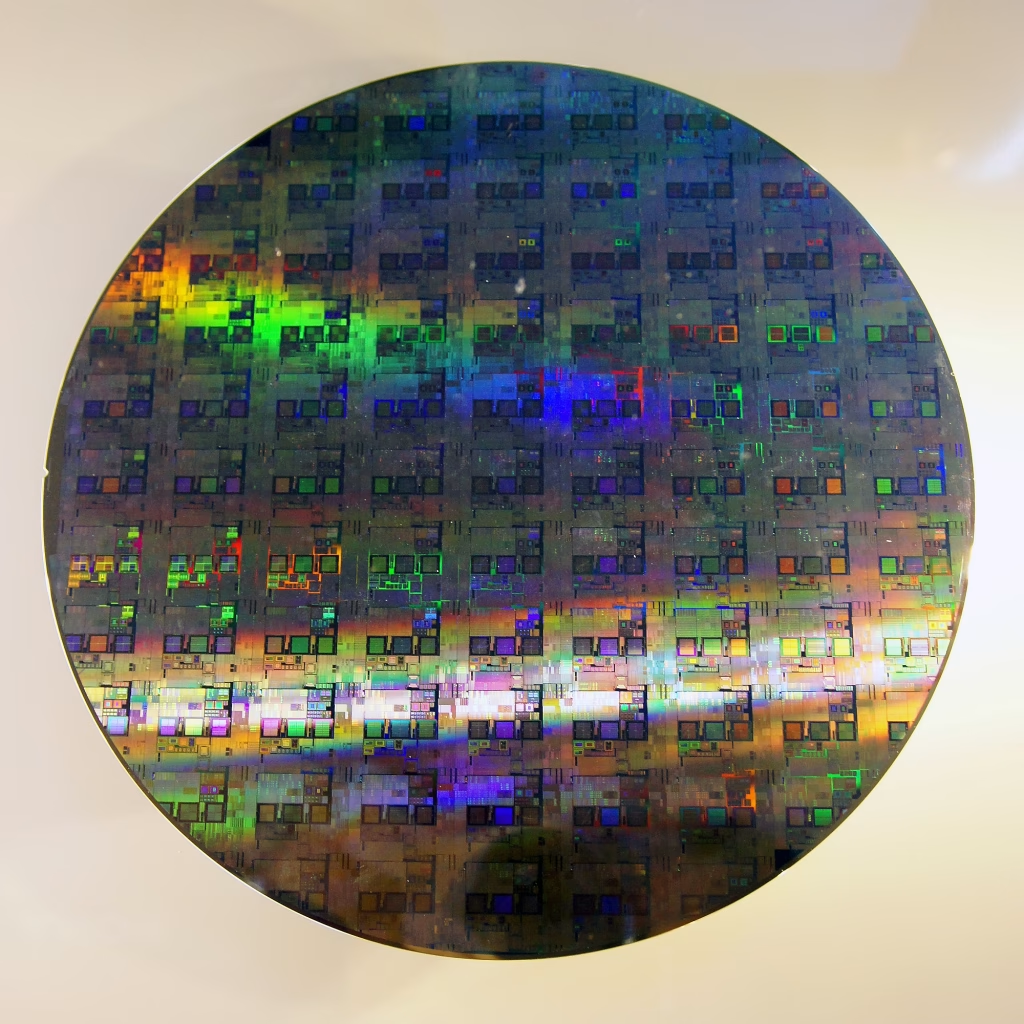
Lithography prints transistor patterns onto silicon with light. Shorter wavelengths enable denser chips. Immersion DUV typically uses 193-nanometer light with a water layer between lens and wafer. Extreme ultraviolet sits at 13.5 nanometers—an order-of-magnitude jump in physics and engineering.
EUV lithography generates light by firing lasers at tin droplets tens of thousands of times per second inside a vacuum. China is barred from buying ASML’s EUV systems under U.S.-led export rules, and Dutch controls also limit some advanced DUV sales. Homegrown immersion DUV is hard; EUV is the real wall.
Scale still favors the Dutch factory
Reported Chinese plans call for roughly five immersion tools in 2026 and about twenty in 2027. ASML’s own capacity path points to around 130 immersion (NXT) systems for 2026, with further expansion under review for later years. Volume, overlay accuracy, uptime, and yield—not a single prototype photo—decide who can run a competitive fab.
Coverage of the Chinese systems also stresses size, reliability testing, and imported components. Analysts still place domestic immersion performance well behind ASML’s current generation, often described as mature-node territory rather than cutting-edge logic. Progress is real. Parity is not.

China remains a revenue pillar—for now
Export walls cut ASML off from EUV and its best DUV sales into China, yet Chinese customers still buy large volumes of less-restricted tools. Company guidance still frames China as about 20% of 2026 net sales—a lower share than recent peak years, but rising in absolute euros as the group’s total outlook climbs on AI-driven demand.
That mix is the strategic tension. Beijing wants fewer foreign dependencies. ASML still books meaningful China revenue while global AI CapEx supports the rest of the franchise. Investors who only watch the share-price spike miss how both stories can run in parallel for years.
Four signals worth tracking next
First, watch whether Chinese immersion tools clear multi-month fab yield gates—not just first deliveries. Second, track how many systems actually ship versus the five-and-twenty roadmap. Third, follow any further tightening of Western DUV export rules. Fourth, treat a credible Chinese EUV production line as the true regime-change event—still the scarce, decisive milestone.
For readers mapping the broader chip cycle, our earlier guide to semiconductor investing covers how equipment, foundries, and design layers compound. The lithography story sits at the sharpest geopolitical edge of that stack.
Deglobalization, not a sudden monopoly break
China’s immersion DUV start is another brick in a longer deglobalization wall: critical tech, dual supply chains, and national industrial policy. It rhymes with other strategic-resource moves—from processing capacity to export licenses on inputs that feed high-tech manufacturing. The West’s monopoly on advanced lithography is contested, not erased.
Near term, ASML’s moat rests on EUV exclusivity, proven high-volume manufacturing, and a supplier ecosystem built over decades. Longer term, investors should treat Chinese toolmaking as a slow burn that can reshape China demand curves—and force Western peers to stay ahead on High-NA EUV and productivity upgrades.
So is ASML’s grip ending?
Not this year. A handful of domestic immersion scanners does not replace a company guiding tens of billions in sales on AI-led capacity adds. The surprise risk is timeline compression on EUV—if Chinese labs close that gap faster than consensus assumes. Until then, the sober frame matches ASML updates: China is both a constrained customer and a strategic competitor-in-waiting.
For global investors, the lesson is familiar. Headline shocks move prices. Factory economics, export law, and physics decide who prints the next generation of chips.