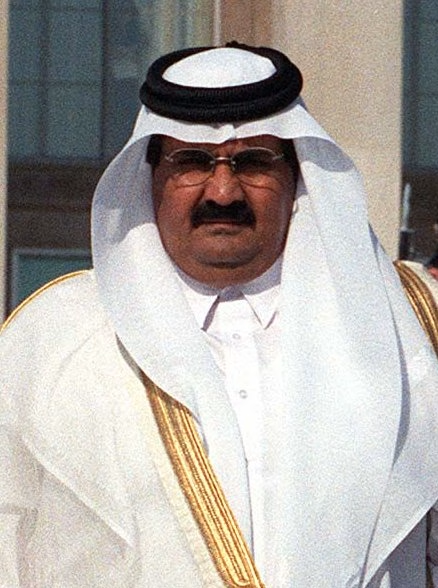
- Sheikh Hamad bin Khalifa Al Thani, the emir who turned Qatar from a quiet Gulf peninsula into a diplomatic and media heavyweight, has died at 74.
- Qatar declared four days of national mourning and scheduled a state funeral — a reminder of how much of the country’s modern identity was built under his rule.
- For residents, investors, and anyone tracking Gulf politics, his legacy is the template Qatar still runs on today.
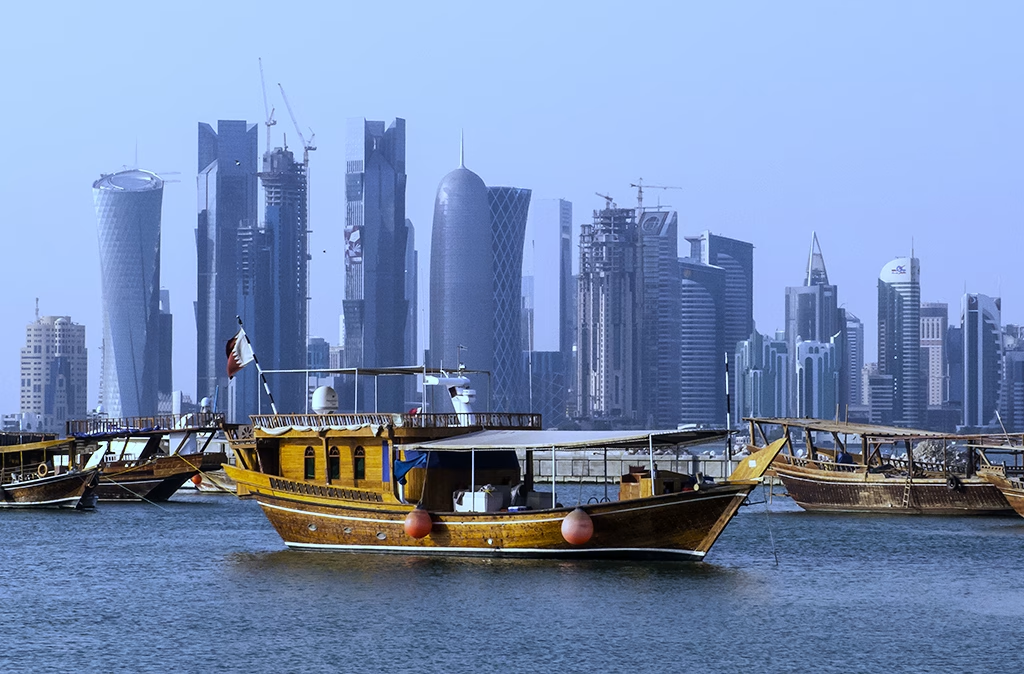
From Provincial Peninsula to LNG Powerhouse
When Sheikh Hamad seized power in a bloodless palace transition in 1995, Qatar was wealthy by regional standards but still narrow in ambition. His bet was liquefied natural gas — scaling production and export capacity until the country became one of the world’s largest LNG suppliers.
Gas revenues funded infrastructure, sovereign wealth, and the outward-facing institutions that define Qatar’s brand today. Per-capita income ranks among the highest globally, even though the resident population is overwhelmingly foreign-born.
That economic model — a small citizen base, a large expatriate workforce, and hydrocarbon exports underwriting state-led development — is the foundation expatriates and businesses still encounter when they land in Doha.
A Rare Voluntary Exit From Power
Sheikh Hamad’s path to the throne was unconventional: he displaced his father in 1995, then did something rarer still in Gulf monarchies — he abdicated voluntarily in 2013, handing rule to his son Sheikh Tamim bin Hamad Al Thani.
Before stepping down, he had already trimmed some of the emir’s absolute powers through constitutional reforms. The peaceful transfer was unusual in a region where leadership changes more often follow death or crisis.
Qatari officials continued to refer to him as the Father Emir, signalling that his influence outlived his formal title. He remained a visible figure at major national events, including the opening of the 2022 FIFA World Cup that his government had won the right to host years earlier.
Washington’s Base and Tehran’s Neighbor
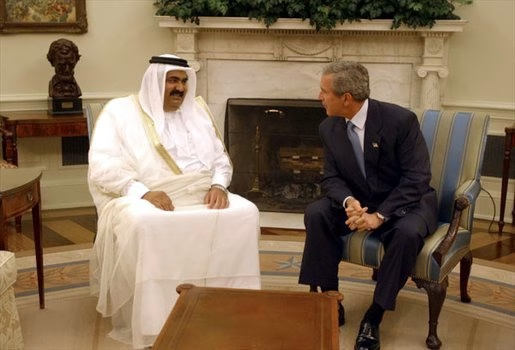
Hamad cultivated a close security partnership with the United States. Under his rule, Al Udeid air base expanded into the largest American military installation in the Middle East — a logistics hub for operations across the region.
At the same time, Qatar maintained pragmatic ties with Shiite Iran and backed Islamist movements such as Egypt’s Muslim Brotherhood, policies that repeatedly collided with Sunni Gulf neighbours. The contradictions were deliberate: Doha positioned itself as indispensable to rival camps.
That balancing act peaked during the 2017–2021 blockade led by Saudi Arabia, the United Arab Emirates, Bahrain, and Egypt — a dispute rooted partly in policies set during Hamad’s era and continued under Tamim.
Al Jazeera and the Soft-Power Playbook
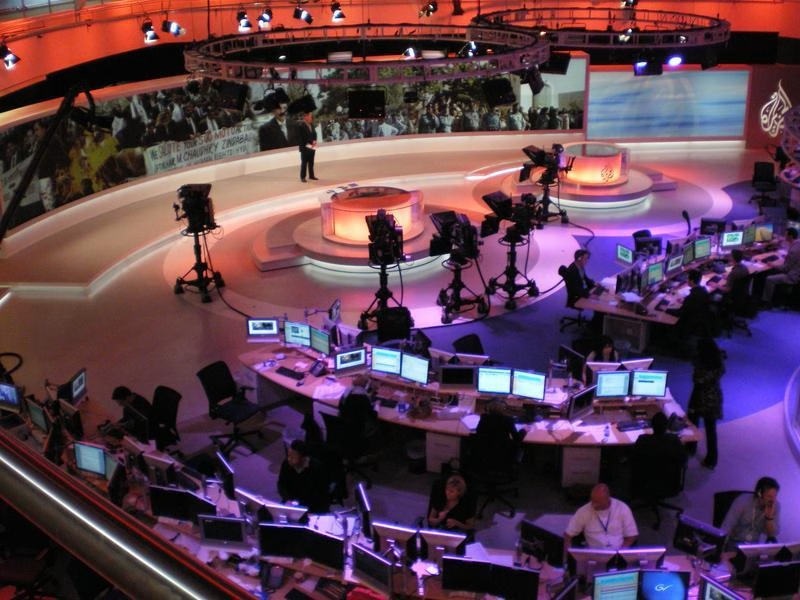
Perhaps Hamad’s most visible legacy beyond gas is Al Jazeera, the satellite news network launched in 1996 with state backing and staffed in part by journalists from the closed BBC Arabic service.
The channel broke the deferential tone common in Arab state media, angering governments from Cairo to Riyadh while earning global attention. It gave Qatar a voice far larger than its geography — and a tool for shaping narratives during the Arab Spring and beyond.
Western capitals sometimes praised Al Jazeera’s independence and sometimes accused it of reflecting Doha’s foreign-policy preferences. Either way, it became the reference point for how a micro-state could project influence without a large army.
Mediator on a Crowded Stage
Qatar under Hamad turned mediation into a national specialty. Doha hosted talks between the Taliban and the United States, helped broker ceasefires in Gaza, and inserted itself into conflicts from Sudan to Lebanon.
That role continues under Tamim. As of mid-2026, Qatar is among the parties involved in diplomacy aimed at ending hostilities between the United States and Iran — a reminder that Hamad’s institutional bet on neutrality-with-access still pays diplomatic dividends.
For a country of roughly three million residents — only about one in ten of whom are Qatari citizens — the ability to convene warring sides is itself a form of leverage.
What His Death Means Now
The Qatar News Agency announced the death on Sunday, 12 July 2026, without citing a cause. A four-day national mourning period began immediately; the funeral was set for Sunday evening local time.
Neighbouring states and international partners issued condolences. India ordered flags flown at half-mast. Jordan declared its own mourning period. The tributes underscored how deeply Hamad embedded Qatar in regional and global diplomacy.
Sheikh Tamim has led Qatar for more than a decade, but the architecture of the state — LNG wealth, Al Jazeera, the U.S. base, mediation offices, World Cup infrastructure — remains Hamad’s blueprint. His death closes a chapter; it does not reset the model.
Readers comparing Gulf hubs may find useful context in our coverage of the United Arab Emirates and Bahrain’s work-visa framework — neighbouring states with different paths through the same energy-rich neighbourhood.