- Malaysia’s 4G and 5G networks stretch from Kuala Lumpur’s towers to Borneo’s jungles — the right SIM unlocks both on day one.
- New 2026 MCMC rules make your original passport, biometrics, and a hotel address mandatory for every local prepaid card.
- An eSIM lets you skip airport queues and connect before you reach immigration.
E-SIM
Malaysia’s mobile market runs on modern infrastructure, and eSIM support is widely available from the major carriers. CelcomDigi, Maxis (Hotlink), U Mobile, and Yes (YTL) all sell digital plans you can activate before landing at Kuala Lumpur International Airport. That means no plastic tray swap — just scan a QR code on airport Wi-Fi and you are online while you wait for baggage.
Our recommended eSIM provider for international travel is BNESIM. After testing numerous providers, this seems to be the cheapest (per GB), easiest to set up, and runs on more than one network in most visited countries.
Our readers can use this code 6PQ5WF6M and get a new eSIM + €3 credit for free, which, considering low rates, it might just be enough to cover your trip.

Malaysia Arrival Points: KLIA and Beyond
KLIA and KLIA2 both host 24-hour counters from CelcomDigi, Maxis, U Mobile, and Yes — typically before passport control so you can register while jet-lagged but still coherent. Airport prices match city shops, so there is no penalty for buying on arrival. Staff insert the SIM, run registration, and test the line in one sitting.
If you prefer to explore first, 7-Eleven, MyNews, and official carrier stores in Pavilion KL, Mid Valley, and Penang’s Gurney Plaza stock tourist packs. Pre-ordering online for airport pickup is an option with some providers, though walk-up counters remain the norm for short visits.
Major Operators: Peninsula to Borneo
Malaysia‘s market consolidated when Celcom and Digi merged into CelcomDigi, now the largest network with the deepest rural reach — critical if you head to Sabah, Sarawak, or the islands. Maxis and its Hotlink brand compete on speed in the Klang Valley and offer tourist plans with roaming data in Singapore, Thailand, and Indonesia. U Mobile targets value seekers with aggressive data bundles, while Yes pushes 4G/5G in urban corridors. All four deliver solid coverage along the west-coast highway and in major cities.
For cross-border trips, Hotlink’s regional roaming on tourist packs can save you buying a second SIM in Johor Bahru before hopping to Singapore. CelcomDigi’s tourist SIM tends to win on sheer coverage if Borneo or east-coast beaches are on your itinerary.

Registration and Requirements
Since February 2026, the MCMC regulator enforces stricter prepaid registration to fight scams. Every tourist must present an original passport — photocopies and phone photos are rejected — plus your visa if one was required to enter. Dealers record your full name, passport number, issuing country, expiry date, and a hotel or temporary address in Malaysia.
Non-citizens may hold only two prepaid SIMs per carrier. Registration includes biometric verification (facial scan via passport reader) at authorised counters — budget ten to twenty minutes at KLIA. Tourist SIMs are valid for a maximum of three months, then automatically terminated. Providers must confirm activation within twelve hours. Never use a card that works before you complete official registration; pre-activated SIMs are prohibited.

Tourist SIMs: Plans, Prices, and Perks
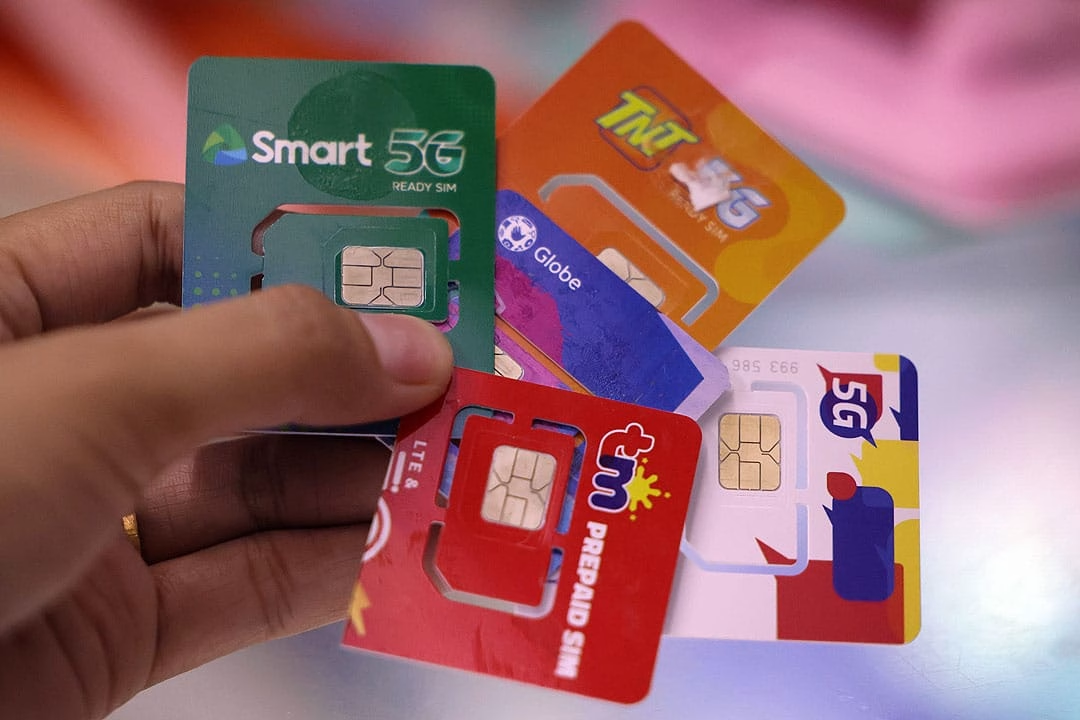
Tourist packs are built for stays of one to thirty days. CelcomDigi’s popular visitor plan runs about RM49 for 65GB at up to 100 Mbps over thirty days (registration fee included). Hotlink’s RM35 tourist SIM delivers 100GB locally with a few gigabytes of roaming in neighbouring ASEAN countries — handy for the Singapore–Johor commute. U Mobile and Yes offer smaller entry plans from roughly RM20 if you only need a week of data.
Most tourist SIMs include local calls and SMS, though data is what travellers actually use. Plans are prepaid and non-contract; when the validity window closes, the line dies — plan a fresh SIM if you extend beyond three months under the new rules.
Topping Up and Managing Your SIM
Reloading is straightforward. Use each carrier’s app (Celcom Life, MyMaxis, MyUMobile), their websites, or buy top-up vouchers at 7-Eleven and petrol stations nationwide. USSD codes still work if you prefer not to install another app. Check balance and expiry in the app before a trip to the Cameron Highlands or Tioman, where shops thin out.
If you are settling in rather than passing through, pair your new number with our guide to cultural etiquette in Malaysia — locals appreciate a greeting in Bahasa Malaysia, and your SIM keeps translation apps and maps running without hotel Wi-Fi limits.